Services
Six ways I help small businesses spend less time on software and more time on the work they opened for. Every project starts with a free 30-minute call.
Automate the repetitive work
If someone does the same steps every day or every week, a computer can usually do them instead: invoices, reports, reminders, data entry.
Usually includes
- Workflow automation with tools like Zapier and Make, or custom scripts
- Scheduled reports that build and send themselves
- Email and text reminders for customers and staff
- Turning paper forms and photos into structured data
For example: Invoices that draft themselves from completed jobs, so the owner reviews and sends instead of typing.
Connect the tools you already pay for
Get your store, bookkeeping, email, and scheduling apps sharing information, so nobody has to retype it.
Usually includes
- Point-of-sale and online store to accounting sync
- CRM and email marketing connections
- Inventory shared across sales channels
- Custom API work when no ready-made connector exists
For example: Shopify orders and inventory flowing into QuickBooks automatically, with no end-of-month reconciling.
Build a tool that fits how you work
When off-the-shelf software is too big, too expensive, or just wrong for your shop, I'll build a small app that does exactly the job.
Usually includes
- Phone-friendly apps for staff on the floor or in the field
- Internal dashboards that pull numbers from your other systems
- Barcode, photo, and receipt capture
- Simple logins and permissions for your team
For example: Supply Checkout, a barcode app that replaced a paper sign-out sheet. Try the demo
Websites that do their job
Fast, clear sites that tell people what you do and how to reach you. Hosting and upkeep are available so you never have to think about it.
Usually includes
- New business websites and landing pages
- Redesigns of sites that have gotten slow or dated
- Online ordering, booking, and simple stores
- Managed hosting, backups, and updates
For example: A single-page site with hours, menu, and online ordering that loads quickly on a phone.
Software cost check-up
A review of every subscription you pay for: what overlaps, what nobody uses, and what you can cancel or replace with something cheaper.
Usually includes
- A full list of subscriptions and what each one costs you per year
- Duplicate and unused tools flagged
- Cheaper or simpler alternatives, where they exist
- A plan for switching without losing data
For example: Three overlapping scheduling and email tools consolidated into one.
Hourly help and advice
Not sure what you need yet? Book time and ask anything: choosing software, sizing up a vendor quote, or fixing a problem that has you stuck.
Usually includes
- Technology planning sessions
- Help choosing between software options
- A second opinion on vendor quotes and contracts
- Hands-on troubleshooting
For example: An hour comparing two point-of-sale systems before signing a three-year contract.
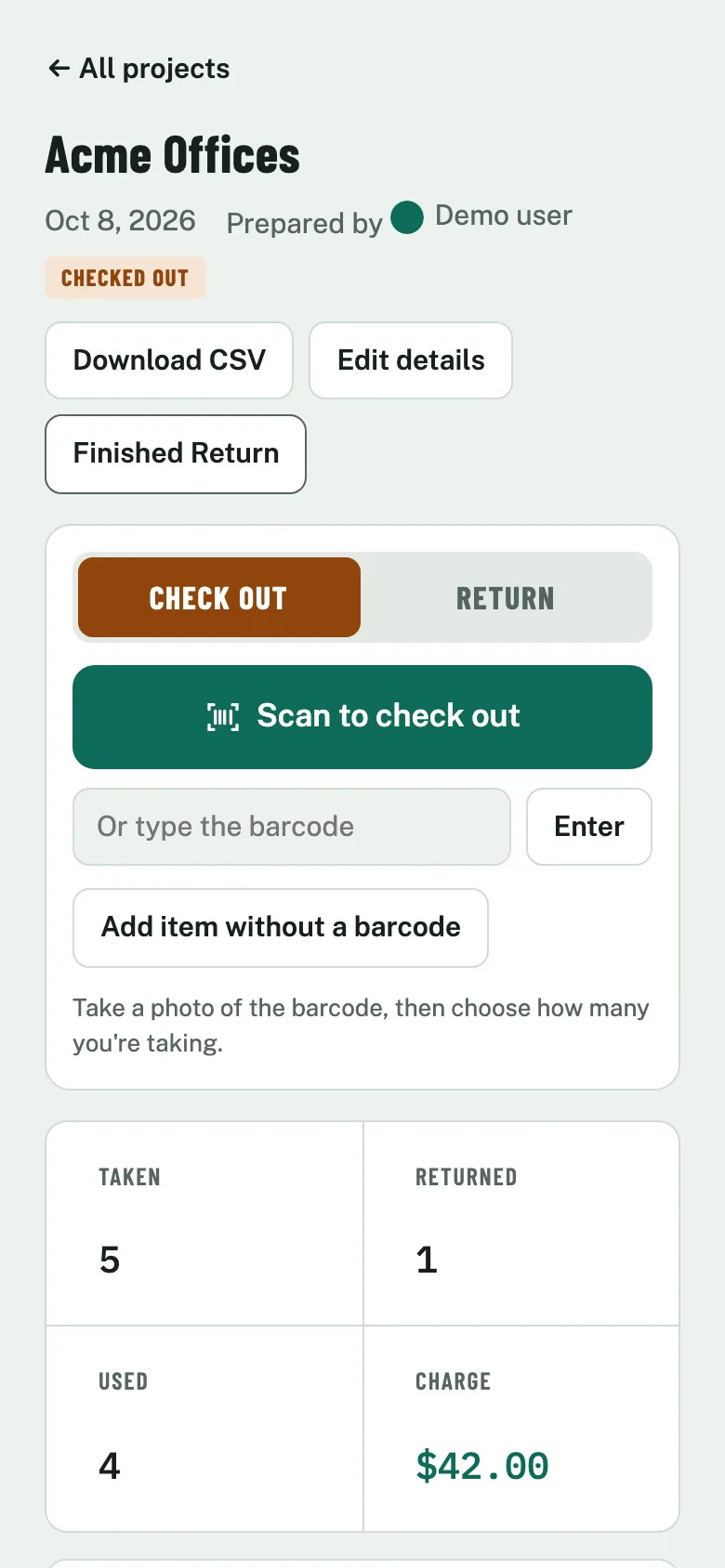
Something I built: Supply Checkout
A replacement for the paper sign-out sheet on the supply closet door. It runs in a phone browser, so there's nothing to install.
- Staff scan a barcode with their phone camera to check items out or back in.
- Stock counts update on their own as things leave and come back.
- Each project adds up what was used and what to charge for it.
- Any project exports to CSV for billing or bookkeeping.
Opens supplycheckout.com in a new tab. Nothing you enter is saved.
How I compare to your other options
Every option has its place. I'm a good fit when you want one person who knows your business, builds the thing, and is still around next year.
| Option | Good for | The trade-off |
|---|---|---|
| An agency | Large projects that need designers, developers, and a project manager at once. | You talk to an account manager, and the person building your project changes from job to job. |
| A freelancer | A single, well-defined job with a specialist skill. | Many move on after delivery, so fixes and changes mean finding someone new. |
| Hiring in-house | Businesses with enough technology work to fill a full-time job. | Salary, benefits, recruiting, and management, even in the slow months. |
| Doing it yourself | Small fixes when you enjoy learning the tools. | Every hour spent figuring out software is an hour not spent running your business. |
| Working with me | Small businesses that want ongoing help without a full-time hire. | I'm one person, so large or rush projects get scheduled around work already underway. |
Not sure which of these you need?
That's what the free call is for. Tell me what's slowing you down, and I'll tell you honestly whether I can help. If you're not happy with our first project, I'll make it right.